The Analog Tax: Calculating What Manual Workflows Are Silently Draining From Your Enterprise
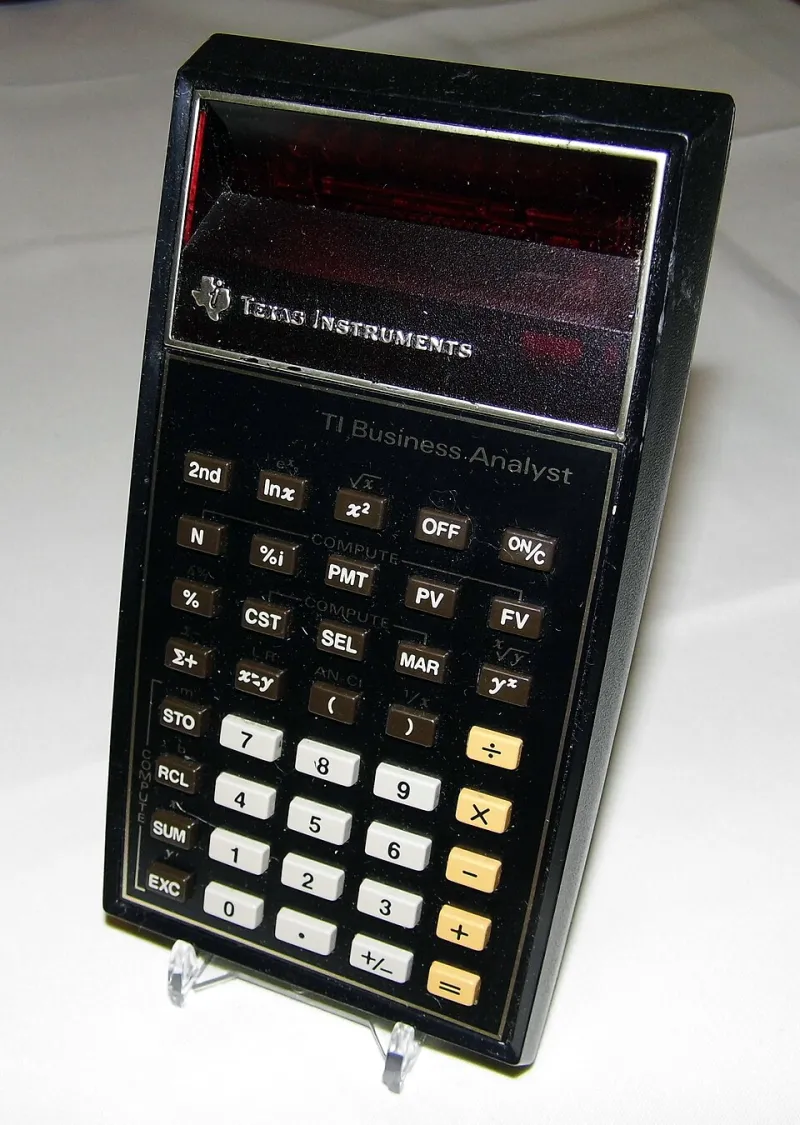
Photo: Joe Haupt from USA, CC BY-SA 2.0, via Wikimedia Commons
There is a line item missing from most corporate budgets. It does not appear in quarterly reports, it rarely surfaces during board reviews, and finance teams almost never flag it during cost-cutting exercises. Yet for thousands of US enterprises still relying on manual data entry, spreadsheet-based reporting, and human-dependent approval chains, this invisible expense accumulates every single business day.
At RoboTexon, we call it the analog tax—the cumulative financial and operational toll that legacy manual processes impose on organizations that have not yet embraced intelligent automation. The numbers, when properly calculated, are rarely comfortable reading.
The Labor Cost Illusion
The most common misconception among business leaders is that manual processes are essentially free because the employees performing them are already on payroll. This logic collapses under scrutiny.
Consider a mid-sized logistics firm in Ohio with 12 operations staff each spending an average of 90 minutes per day reconciling shipment data across multiple spreadsheets. At an average fully loaded labor cost of $38 per hour—factoring in salary, benefits, and overhead—that single task costs the company approximately $123,000 annually. And that is before accounting for the downstream delays that spreadsheet reconciliation introduces into customer billing cycles.
A 2023 analysis by Forrester Research estimated that knowledge workers in US enterprises spend between 20 and 40 percent of their productive hours on tasks that could be automated with current technology. For a company with 200 employees averaging $65,000 in annual compensation, even the conservative end of that range represents over $2.6 million in labor allocated to work that intelligent systems could handle at a fraction of the cost.
Human Error: The Multiplier Nobody Budgets For
Labor cost is only the beginning. Human error introduces a compounding variable that transforms a manageable expense into a genuine financial liability.
Research from IBM has consistently found that the cost to correct a data error escalates dramatically depending on when it is discovered. An error caught at the point of entry costs pennies to fix. The same error discovered after it has propagated through downstream systems—informing a procurement decision, shaping a financial forecast, or triggering a customer invoice—can cost hundreds or even thousands of dollars to remediate.
A regional healthcare network in Texas discovered this principle in painful detail when an internal audit revealed that manual data entry errors in patient billing were generating an average of $340,000 in claim corrections and reprocessing costs per year. The errors themselves were minor—transposed digits, incorrect procedure codes, mismatched insurance identifiers—but their downstream consequences were substantial. After deploying an automated data validation and routing system, the organization reduced billing errors by 94 percent within the first two quarters.
The Opportunity Cost Equation
Beyond what manual processes actively cost, there is the equally significant question of what they prevent organizations from achieving.
When talented analysts spend their days reformatting data in Excel rather than interpreting it, enterprises lose strategic insight. When customer service representatives manually look up account histories instead of having real-time data surfaced automatically, response times suffer and customer satisfaction declines. When procurement teams process purchase orders by hand, negotiating leverage erodes and vendor relationships stagnate.
A manufacturing company based in Michigan conducted an internal time-motion study and determined that its supply chain team was spending 34 percent of its working hours on data aggregation tasks—pulling figures from disparate systems and consolidating them into unified reports. After implementing an automated integration platform, those same employees redirected their capacity toward supplier negotiation and demand forecasting. Within 18 months, the company had reduced procurement costs by 11 percent—a figure that dwarfed the investment in automation by a ratio of nearly seven to one.
The ROI Framework: Building Your Own Case
For organizations ready to quantify their own analog tax, a structured ROI framework provides a practical starting point.
Step 1 — Map the manual touchpoints. Identify every recurring process in your organization that involves a human manually transferring, reformatting, or validating data. Include frequency, average time per task, and the number of employees involved.
Step 2 — Apply fully loaded labor costs. Multiply time expenditure by the true cost of each employee, incorporating salary, benefits, payroll taxes, and an overhead allocation. Most organizations find this number is 1.25 to 1.4 times the base salary figure.
Step 3 — Estimate error frequency and remediation costs. Even conservative assumptions—a 1 percent error rate on manual data entry with an average $50 correction cost—produce meaningful annual figures at enterprise scale.
Step 4 — Quantify opportunity displacement. Assign a conservative value to the strategic work that manual processes crowd out. If an analyst could be generating insights that support a single additional $200,000 contract per year, that represents real foregone revenue.
Step 5 — Model the automation alternative. Obtain implementation and licensing costs for the relevant automation solution, apply a standard depreciation schedule, and compare total cost of ownership against the analog tax calculated in steps one through four.
In the majority of enterprise scenarios, this exercise produces a payback period of 12 to 24 months—and a five-year ROI that ranges from 300 to over 600 percent.
Why Decision-Makers Consistently Underestimate the Burden
Given the clarity of this math, why do so many US enterprises continue operating with significant manual process exposure? The answer lies in a set of cognitive and organizational biases that systematically obscure the true cost.
Sunk cost thinking leads managers to view existing spreadsheet infrastructure as an asset rather than a liability. Familiarity bias makes legacy workflows feel safer than unfamiliar automated alternatives. And because manual process costs are distributed across dozens of departments and thousands of small time allocations, they never coalesce into a single, visible line item that demands executive attention.
Perhaps most significantly, the employees performing manual tasks often do not surface the burden because doing so might feel like an implicit request to eliminate their own roles—a concern that thoughtful change management and workforce transition planning can and should address directly.
The Strategic Imperative
The analog tax is not a fixed cost. It is a choice—one that US enterprises make implicitly every year they defer automation investment. As intelligent automation platforms become more accessible, more configurable, and more rapidly deployable, the financial case for action grows stronger and the justification for inaction grows thinner.
The spreadsheets your organization relies on today are not neutral tools. They are accruing interest on a debt that, sooner or later, every analog enterprise will be required to pay. The only meaningful variable is whether that payment takes the form of a deliberate, managed automation investment—or an unplanned competitive reckoning.