Buried Treasure: How US Enterprises Are Extracting Real Value From Aging Infrastructure Through Intelligent Automation
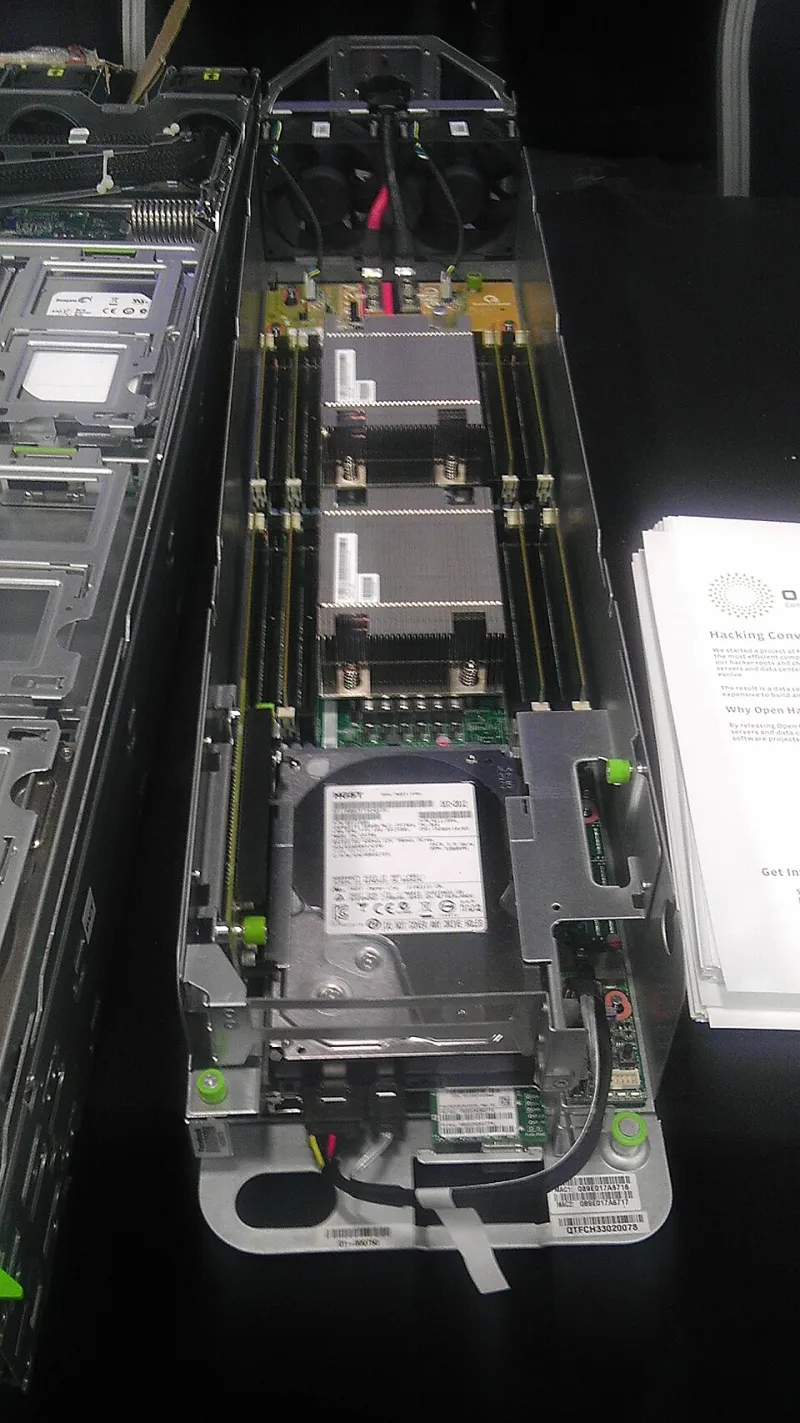
Photo: Robert.Harker, CC BY-SA 3.0, via Wikimedia Commons
The conventional wisdom about legacy technology has long followed a familiar script: aging systems are liabilities, modernization is inevitable, and the only responsible path forward is a comprehensive overhaul. That narrative has driven enormous technology spending across US enterprises — and produced an equally impressive catalog of overbudget, underdelivered transformation programs that disrupted operations without delivering the promised returns.
A different approach has been gaining traction, and the results are compelling enough to warrant serious attention. Rather than treating legacy infrastructure as something to be discarded, a growing number of established US organizations are treating it as a foundation — imperfect, but serviceable — onto which intelligent automation can be layered to extract value that the original systems were never designed to deliver.
The Real Cost of Rip-and-Replace
Before examining what works, it is worth understanding why the conventional alternative so frequently fails. Enterprise technology replacement projects — particularly those involving core systems in banking, insurance, healthcare, and manufacturing — carry inherent complexity that vendors and internal advocates routinely underestimate during the planning phase.
Data migration alone can consume years of effort and introduce errors that compromise downstream operations. Staff retraining requirements are consistently underbudgeted. Integration dependencies with adjacent systems create cascading complications that extend timelines and inflate costs. And throughout the transition period, the organization operates in a state of elevated operational risk that leadership rarely anticipates fully.
For many US companies, particularly those in regulated industries where system stability is a compliance requirement, the risk profile of full replacement is simply not acceptable. The legacy system, for all its limitations, is a known quantity. That familiarity has real value — and intelligent automation strategies that respect it tend to fare considerably better than those that ignore it.
Auditing the Environment: Finding the Signal in the Noise
The starting point for any legacy automation initiative is an honest inventory of the existing environment. This is not a technology audit in the traditional sense. It is a workflow audit — one that maps how data actually moves through the organization, where human effort is concentrated, and where inefficiencies compound over time.
Practitioners who have led these assessments consistently identify several high-yield patterns. Manual data re-entry between systems is among the most common and most addressable. When staff members routinely extract information from one system and manually input it into another, the opportunity for robotic process automation (RPA) is almost always present and frequently straightforward to implement.
Report generation is another reliable target. Many legacy systems can produce raw data exports but lack the analytical or presentation layer that modern decision-making requires. Rather than replacing the source system, intelligent automation can intercept that output, apply analytical logic, and deliver formatted insights to stakeholders — effectively adding a modern intelligence layer to an antiquated data source.
Exception handling and reconciliation workflows deserve particular attention. These processes, which typically require human judgment to resolve discrepancies between systems, are often more automatable than they appear once the exception taxonomy is properly defined. Organizations that invest in categorizing their exception types frequently discover that a significant majority follow patterns that automation can resolve without human intervention.
Building the Business Case for Skeptical Stakeholders
Perhaps the most underappreciated challenge in legacy automation initiatives is not technical — it is political. Finance committees and executive leadership teams that have lived through failed technology projects are understandably cautious about new proposals, regardless of how well-constructed they appear on paper.
The most effective business cases for legacy automation share several characteristics. They are specific about baseline metrics. Rather than projecting efficiency improvements in percentage terms, they document current processing volumes, error rates, cycle times, and labor costs with sufficient precision that progress can be measured unambiguously. Vague claims about transformation are far less persuasive than concrete statements about how many hours per week a specific team spends on a specific task.
They also sequence investments deliberately. Proposing a phased approach that begins with high-confidence, lower-cost automation opportunities — and uses early results to fund subsequent phases — is considerably more credible than a single large capital request. Demonstrating ROI on a contained pilot before scaling is not merely a risk management strategy; it is a trust-building mechanism with stakeholders who have reason to be skeptical.
Finally, effective business cases address the risk comparison honestly. The relevant question is not whether legacy automation carries risk — all technology initiatives do — but how that risk compares to the alternative. When the alternative is full system replacement, the risk calculus often favors automation, and making that comparison explicit can shift the conversation materially.
Integration Architectures That Bridge Old and New
For organizations concerned about the technical feasibility of connecting intelligent automation tools to legacy infrastructure, the news is generally more encouraging than expected. Modern integration platforms and API management tools have substantially lowered the barrier to connecting contemporary automation capabilities with older systems, including mainframe environments that predate the internet era.
RPA platforms, in particular, are designed to interact with legacy applications through the same interface layers that human users access — meaning they do not require the underlying system to expose APIs or support modern integration standards. This characteristic makes them especially valuable in environments where the source system is too old, too brittle, or too poorly documented to modify safely.
For organizations with somewhat more modern legacy infrastructure, middleware and integration platform as a service (iPaaS) solutions can create durable data bridges that allow intelligent automation to operate on clean, structured data feeds rather than screen-scraped outputs. Investing in this integration layer early typically pays dividends as the automation program scales.
From Quick Wins to Strategic Transformation
The organizations that extract the most sustained value from legacy automation programs are those that treat early wins as learning investments rather than endpoints. Each successful automation deployment generates operational data, process insights, and organizational capability that compounds over time.
A regional insurance carrier in the Southeast, for example, began its automation journey by targeting claims data entry — a high-volume, low-complexity process that RPA handled effectively within weeks of deployment. The efficiency gains were meaningful, but the more durable benefit was the operational credibility the technology team accumulated, which enabled them to pursue more complex automation opportunities in underwriting and compliance that would have been difficult to fund without a demonstrated track record.
This progression — from contained quick wins to strategically significant automation — is the pattern that distinguishes programs delivering lasting value from those that stall after initial deployment.
The Modernization Path That Doesn't Start With Demolition
Legacy infrastructure is not a problem to be solved by replacing it. For most established US enterprises, it is a constraint to be navigated — one that intelligent automation is increasingly well-equipped to address. The organizations that recognize this distinction are finding that the data graveyard they assumed required expensive excavation is, in fact, accessible from the surface — if you know where to look and how to dig.