Diagnosing Before Deploying: Why Your Automation Investment May Be Solving the Wrong Problem
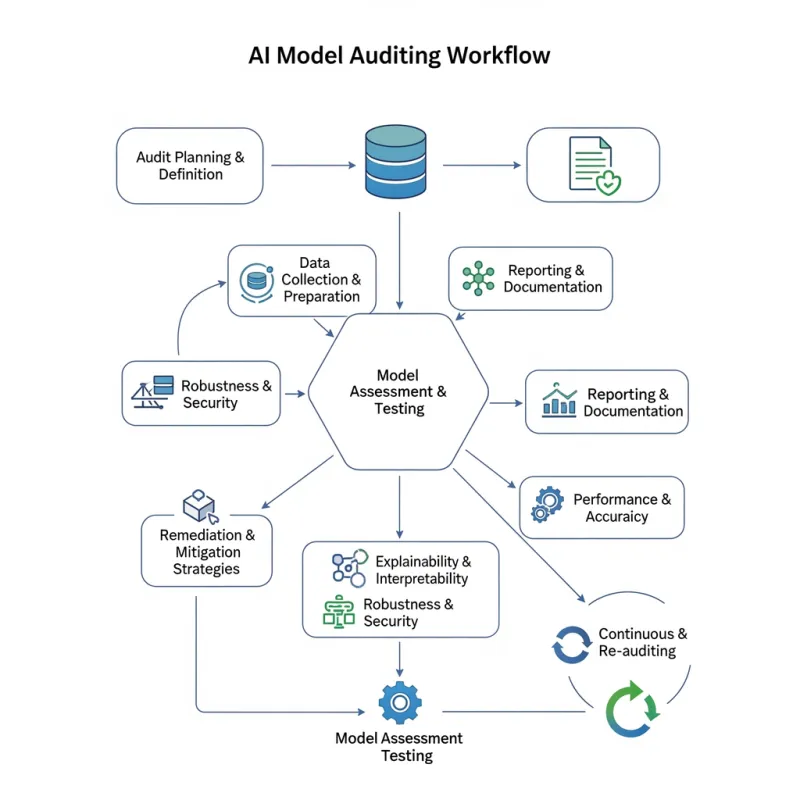
Photo: business process audit workflow analysis enterprise technology, via aieticks.com
There is a quiet frustration spreading through the operations floors and boardrooms of American enterprises. Automation has been purchased, configured, and launched. Dashboards show activity. Reports confirm uptime. And yet, somehow, the productivity gains never materialize in the way the vendor pitch decks promised. Costs remain elevated. Cycle times barely improve. The return on investment looks better on paper than it does in practice.
The problem, more often than not, is not the automation itself. It is the sequence of decisions that preceded it.
The Fundamental Mistake: Automating Visible Processes Instead of Impactful Ones
When organizations decide to pursue intelligent automation, the instinct is to target what is most obvious. High-volume, repetitive tasks rise to the top of the list. Invoice processing, customer onboarding forms, data entry workflows — these are the processes that look like automation candidates because they are visible and quantifiable. They are also frequently not the processes where friction is doing the most damage.
Consider a mid-sized logistics company based in the Midwest that invested heavily in automating its freight documentation workflow. On paper, the numbers justified the project: thousands of documents processed weekly, each requiring manual data entry. The automation worked. Processing time dropped significantly. But shipment delays continued at nearly the same rate as before, because the actual bottleneck was not data entry — it was the approval chain that followed. Three separate department heads had to sign off on certain freight categories, and that process had never been examined, let alone automated.
The company had treated a symptom. The underlying condition remained entirely intact.
Why Bottlenecks Hide in Plain Sight
Operational bottlenecks are often invisible not because they are obscure, but because they are normalized. When a particular delay or friction point has existed long enough, the workforce adapts around it. Workarounds become standard practice. Informal communication channels emerge to compensate. The bottleneck becomes part of the organizational culture rather than a problem to be solved.
This normalization effect is precisely why self-reported process assessments tend to mislead automation planning. Employees describe how work is supposed to flow, not necessarily how it actually flows on a Tuesday afternoon when the system is slow and the manager is unavailable. The gap between the documented process and the lived process is where real bottlenecks reside.
Process mining tools — which analyze event logs from enterprise systems to reconstruct actual workflow patterns — have become increasingly valuable in surfacing this gap. Rather than relying on interviews or flowcharts, process mining generates empirical maps of how work moves through an organization, including deviations, delays, and informal rerouting that never appears in official documentation.
A Practical Audit Framework for Identifying Hidden Friction
Before committing resources to any automation initiative, enterprises benefit from a structured diagnostic phase. The following framework, informed by how leading US organizations have approached automation readiness, provides a foundation for that work.
Step One: Map the actual process, not the intended one. Conduct observational walkthroughs with the teams executing the work. Shadow individual contributors across different shifts and roles. The goal is to document what actually happens, including the informal handoffs, the manual overrides, and the email threads that substitute for system functionality.
Step Two: Quantify delay at each stage. Rather than measuring overall cycle time, break the process into discrete stages and measure time-in-stage for each. Bottlenecks typically reveal themselves as stages where work accumulates and waits, even when upstream and downstream stages are running efficiently.
Step Three: Classify each friction point by type. Not all bottlenecks respond to the same intervention. Some are volume problems, where throughput simply exceeds capacity. Others are coordination problems, where handoffs between people or systems introduce delay. Still others are decision problems, where the process stalls because authority or information is insufficient. Automation addresses these differently, and misidentifying the type leads to misaligned solutions.
Step Four: Prioritize by impact, not by ease. The temptation to automate what is easiest to automate is understandable, but it is also a reliable path to disappointing results. Prioritization should weight business impact — reduction in cycle time, cost per transaction, error rate — over implementation simplicity.
Step Five: Pilot before scaling. Even well-diagnosed bottlenecks can produce unexpected results when automation is applied. Piloting in a controlled environment with measurable success criteria allows organizations to validate assumptions before committing to enterprise-wide deployment.
The Role of Intelligent Systems in Diagnostic Work
At RoboTexon, the application of intelligent automation does not begin at the deployment stage — it begins at the diagnostic stage. AI-driven process analysis tools can identify patterns in enterprise data that human observers miss, including subtle correlations between process delays and external variables such as time of day, staffing levels, or upstream system latency.
This means that the audit itself can be augmented by the same class of technology being evaluated for deployment. Organizations that leverage intelligent diagnostic tools tend to arrive at more accurate bottleneck identification and, consequently, more effective automation outcomes.
What Comes After the Audit
A completed automation audit does not guarantee a successful deployment. But it dramatically improves the odds. Enterprises that understand precisely where friction lives before selecting a solution are better positioned to evaluate vendor offerings objectively, define meaningful success metrics, and avoid the common trap of automating processes that were never the actual problem.
The audit also changes the internal conversation. Instead of asking which technology to purchase, organizations begin asking which problem most urgently requires resolution. That shift in framing — from solution-first to problem-first — is often the difference between automation that transforms operations and automation that simply adds another layer of complexity to processes that were already struggling.
For US enterprises operating in competitive markets where operational efficiency directly affects margin, the cost of getting this sequence wrong is not merely a failed IT project. It is a compounding disadvantage that accumulates with every quarter the underlying bottleneck goes unaddressed.
The technology to solve these problems exists. The more pressing challenge is ensuring organizations deploy it in the right place.