The Human Edge: Why the Most Effective Automation Strategies Keep People at the Center
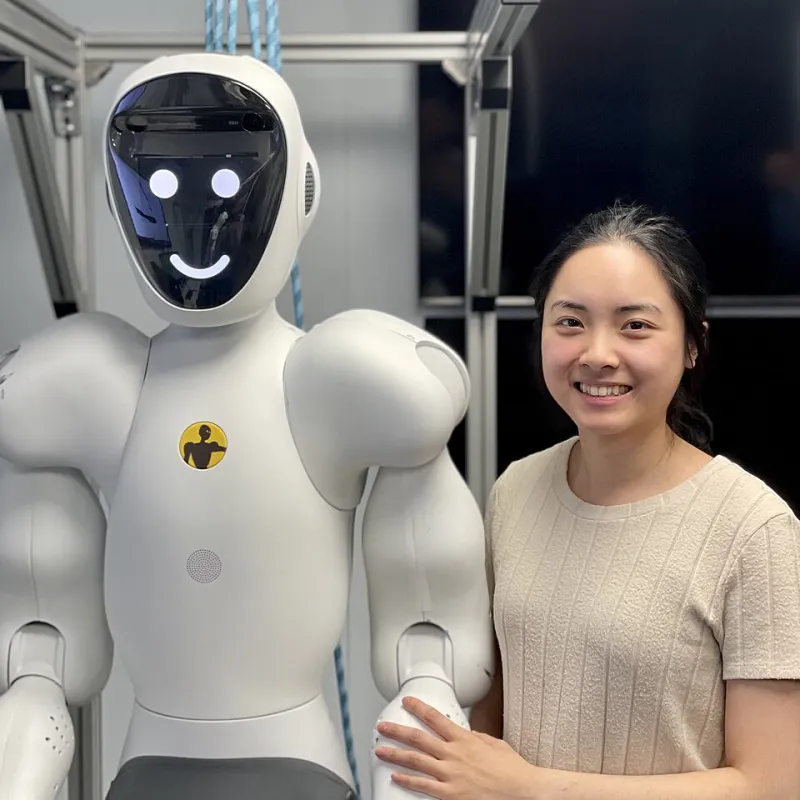
Photo: Nicholas-halodi, CC BY-SA 4.0, via Wikimedia Commons
For years, the dominant narrative around automation has been framed as a zero-sum contest: machines advance, workers retreat. Boardrooms across the United States have wrestled with the optics of deploying robotic systems and AI-driven workflows, often treating the technology as a mechanism for headcount reduction rather than a tool for capability expansion. That framing, it turns out, has been quietly undermining results.
A more nuanced picture has emerged from enterprises that have logged meaningful experience with intelligent automation. In sector after sector, organizations that design their systems to augment human judgment — rather than circumvent it — are recording measurably better outcomes. The lesson is not that automation fails. It is that automation deployed without human partnership frequently underperforms its potential.
Rethinking the Binary
The instinct to treat automation as a replacement technology is understandable. Cost modeling often centers on labor substitution, and vendors have historically positioned their platforms around headcount efficiency. But that framing introduces a dangerous blind spot: it ignores the categories of work where human cognition remains not merely useful, but irreplaceable.
Pattern recognition in ambiguous environments, ethical judgment under uncertainty, relationship-driven communication, and adaptive reasoning in novel situations — these are not capabilities that current AI systems replicate reliably. When enterprises design automation that bypasses these competencies entirely, they often discover the gap only after a costly failure.
The more productive question is not "which jobs can we automate?" but rather "where does machine precision amplify human expertise, and where does human judgment catch what machines miss?"
Healthcare: When Algorithms Need a Second Opinion
Few industries illustrate the value of hybrid workflows more clearly than healthcare. Diagnostic imaging has been one of the most celebrated applications of machine learning in medicine, with AI models demonstrating impressive accuracy in detecting anomalies in radiology scans. Several major US health systems have deployed these tools at scale — and the results are instructive.
In practice, the highest-performing implementations are not those where AI renders a final diagnosis, but those where AI flags candidates for human review. Radiologists working alongside AI-assisted screening tools report that the technology surfaces cases they might have deprioritized, while their clinical experience catches edge cases the algorithm misclassifies. The system is more accurate than either party operating independently.
Beyond diagnostics, clinical decision support platforms in hospital networks across the Midwest and Southeast have demonstrated that physician adoption — and therefore clinical impact — is substantially higher when the technology presents recommendations rather than directives. Clinicians who feel their expertise is respected engage with the tools more consistently, which in turn improves patient outcomes. Automation that sidelines professional judgment tends to generate workarounds, not adoption.
Finance: Compliance That Gets Smarter With Human Oversight
In financial services, regulatory compliance has become one of the most resource-intensive operational challenges facing US banks and investment firms. Transaction monitoring, anti-money laundering protocols, and Know Your Customer processes generate enormous volumes of alerts — the majority of which are false positives that consume analyst time without producing actionable findings.
Automated screening systems have dramatically reduced the volume of alerts that reach human reviewers. But the most effective deployments are those where experienced compliance analysts remain closely integrated into the workflow — not as a rubber stamp, but as an active feedback mechanism. Analysts who review AI-flagged cases and document their reasoning create a continuous learning loop that refines model accuracy over time.
Several regional banks that pursued aggressive automation without this feedback architecture found that their false positive rates plateaued or worsened after initial deployment. The models, trained on historical data, lacked the contextual intelligence that experienced compliance professionals apply intuitively. Reintroducing structured human review — and using that review to retrain models — restored improvement trajectories. The hybrid design was not a compromise. It was the architecture that made the system functional.
Logistics: Judgment at the Edge of the Network
In supply chain and logistics operations, the case for hybrid workflows is perhaps most visible. Warehouse automation has advanced substantially, with robotic picking systems, autonomous guided vehicles, and AI-driven inventory management now common in large US distribution centers. But experienced logistics operators will note that the edge cases — the exceptions, the damaged goods, the misrouted shipments, the vendor disputes — are where human judgment earns its keep.
One national third-party logistics provider found that its fully automated exception-handling system was resolving fewer than 60 percent of flagged cases correctly, with the remainder requiring manual intervention after significant delay. By redesigning the workflow so that human logistics coordinators handled exception routing while automation managed routine processing, resolution rates climbed past 90 percent and average handling time decreased.
The coordinators, freed from the repetitive volume that automation now absorbed, had more capacity to focus on the complex cases where their expertise made a measurable difference. The technology did not diminish their role — it elevated it.
Designing for Collaboration, Not Substitution
The common thread across these cases is intentional design. Hybrid human-AI workflows do not emerge organically from automation deployments that happen to retain some staff. They require deliberate architecture: identifying the decision points where human judgment adds irreplaceable value, building interfaces that surface the right information to human reviewers at the right moment, and creating feedback mechanisms that allow human insights to improve automated systems over time.
Organizations pursuing this approach should invest in change management alongside technology deployment. Workers who understand how their role fits within an automated system — and who see evidence that their expertise is genuinely valued — engage more productively with the tools. That engagement is not a soft metric. It directly affects the quality of the feedback loops that determine whether automated systems improve or stagnate.
The Competitive Calculus
For US enterprises evaluating their automation strategies, the evidence increasingly favors a reframing of the core objective. The goal is not maximum automation. It is optimal performance — and in a significant proportion of high-value workflows, that optimum includes human expertise as a structural component, not a transitional placeholder.
Companies that internalize this distinction are building automation programs with longer productive lifespans, higher adoption rates, and better outcome metrics. Those still operating from the substitution model are discovering, often expensively, that the machines they deployed are only as good as the human judgment they were designed to replace.
Intelligent automation, at its most effective, is not a ceiling on human contribution. It is a platform that raises the floor for what human expertise can accomplish.