When Savings Become a Mirage: Rethinking the True Economics of Enterprise Automation

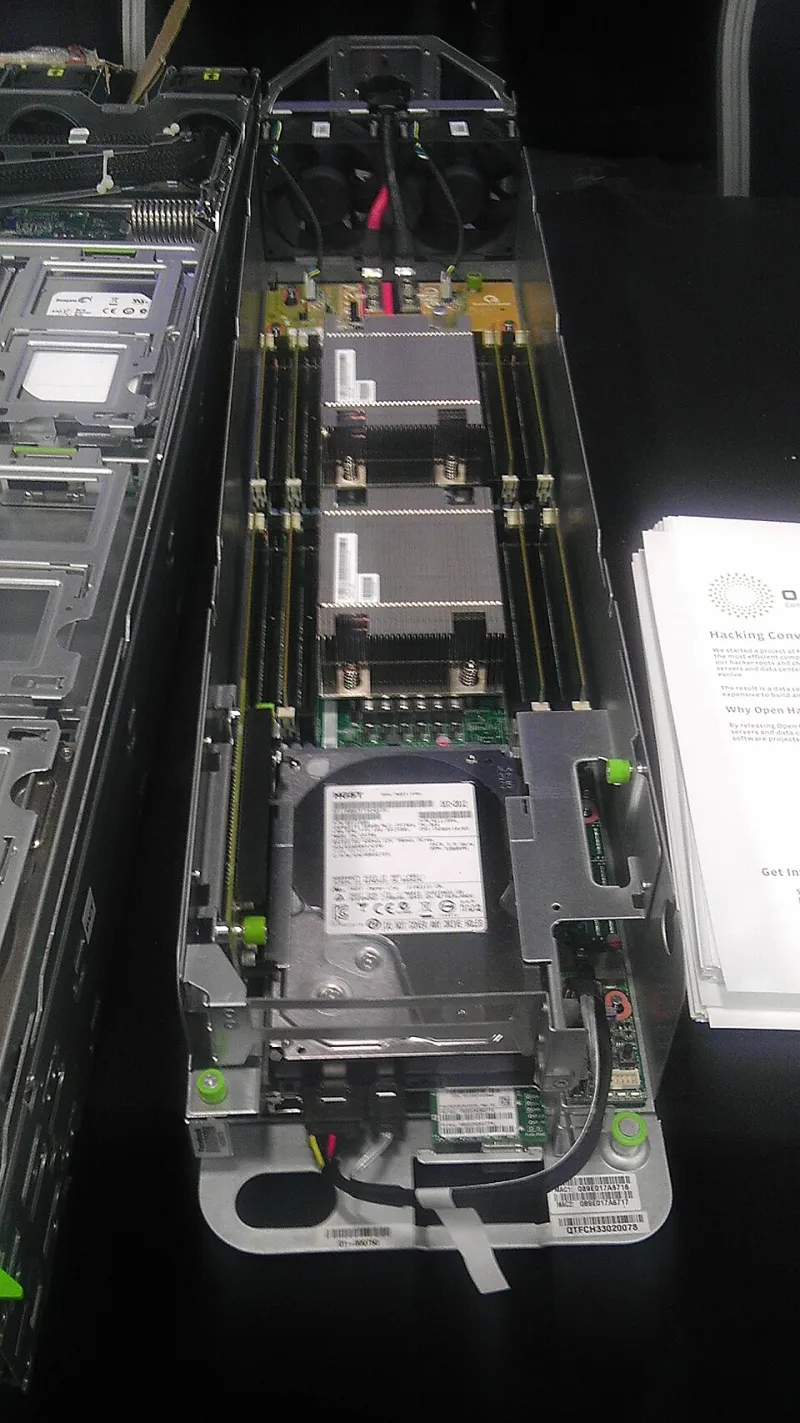
Photo: Village Global, CC BY 2.0, via Wikimedia Commons
For the better part of the last decade, the dominant pitch for enterprise automation has followed a familiar script: deploy the technology, reduce headcount, watch the savings accumulate. It is a narrative that resonates in boardrooms, sails through budget approvals, and looks compelling on a spreadsheet. It is also, in many cases, a significant oversimplification — one that is quietly costing US enterprises far more than the automation was ever supposed to save.
This is the automation paradox. The very initiatives designed to reduce operational expenditure are, when improperly scoped and evaluated, generating hidden liabilities that erode financial gains before they can be realized. Understanding why this happens — and how to build a more honest accounting framework — is increasingly essential for any enterprise serious about sustainable technological investment.
The Labor Reduction Fallacy
The most common mistake in automation ROI calculations is treating labor cost reduction as the primary, or even sole, financial benefit. When a company automates a process previously handled by ten employees, the logic seems straightforward: eliminate those salaries, and the technology pays for itself within a defined period.
But this calculation omits several inconvenient realities. First, workforce reduction in practice is rarely as clean as projected. Legal obligations, severance packages, retraining commitments, and the retention of oversight personnel all chip away at the anticipated savings. In heavily unionized industries — still a significant portion of US manufacturing, logistics, and utilities — workforce restructuring tied to automation can trigger contractual obligations that push timelines and costs well beyond initial projections.
Second, and more consequentially, labor cost reduction addresses only one side of the ledger. The other side — the full cost of deploying, integrating, and sustaining the automation system — is routinely underestimated.
The Infrastructure Iceberg
Below the visible cost of purchasing an automation platform lies a substantial infrastructure requirement that many enterprises fail to fully account for at the outset. Legacy systems — the kind that still power a remarkable share of US enterprise operations — rarely interface cleanly with modern automation tools. Middleware solutions, API development, data pipeline construction, and security architecture updates are not optional additions; they are prerequisites.
In a 2023 analysis of enterprise software deployments, integration complexity was cited as the leading cause of cost overruns in automation projects, with actual integration expenses frequently exceeding original estimates by 40 to 70 percent. For organizations running decades-old ERP systems or proprietary operational technology, the infrastructure gap can be even wider.
Ongoing maintenance compounds the problem. Automation systems require regular updates, performance monitoring, and periodic reconfiguration as business processes evolve. These are not one-time expenses. They represent a permanent addition to the operational cost base — one that rarely appears in initial ROI models.
Opportunity Cost: The Expense Nobody Tracks
Perhaps the most underappreciated financial dimension of automation investment is opportunity cost — specifically, the cost of failed or underperforming implementations.
When an automation initiative stalls, gets rolled back, or delivers substantially less than promised, the enterprise absorbs not only the sunk cost of the deployment but also the organizational disruption, the deferred value of the process improvements that never materialized, and the reputational damage within the organization that makes future technology investments harder to champion.
Industry research consistently suggests that a meaningful percentage of enterprise automation projects — estimates range from 30 to 50 percent, depending on the sector and technology category — fail to meet their stated objectives within the original timeframe and budget. Each of those failures carries an opportunity cost that rarely makes it into the post-mortem financial analysis.
A Framework for True Automation Economics
Rebuilding ROI analysis around a more complete picture of automation economics requires expanding the evaluation framework in two directions: capturing the full cost of deployment, and recognizing the full spectrum of value generated.
On the cost side, enterprises should account for:
- Total acquisition cost, including licensing, hardware, and implementation services
- Integration expenditure, modeled conservatively based on the actual complexity of existing systems
- Change management investment, including training, process redesign, and internal communications
- Ongoing maintenance and support, projected over a realistic operational lifespan
- Risk-adjusted failure cost, incorporating a probability-weighted estimate of partial or full implementation failure
On the value side, the framework must move beyond labor savings to include:
- Process velocity gains, measured in throughput improvements and cycle time reductions
- Error rate reduction, translated into the downstream cost of rework, compliance risk, and customer attrition
- Scalability premium, reflecting the enterprise's capacity to grow without proportional cost increases
- Data asset creation, acknowledging that well-implemented automation generates structured operational data with compounding strategic value
- Employee redeployment value, capturing the productivity of workers shifted from repetitive tasks to higher-judgment functions
Reframing the Conversation
The enterprises achieving the most durable returns from automation are not those that frame the investment primarily as a cost-cutting exercise. They are the organizations that approach automation as a capability investment — one that will generate value across multiple dimensions over an extended horizon, provided it is scoped honestly and resourced adequately.
This reframing has practical implications for how automation projects are approved and governed. Business cases built exclusively on headcount reduction tend to underfund integration, underestimate maintenance requirements, and set unrealistic timelines. Business cases built on capability expansion tend to be more conservative in their projections, more thorough in their planning, and ultimately more accurate in their outcomes.
For US enterprises navigating an increasingly competitive landscape, the difference between these two approaches is not merely philosophical. It is the difference between automation that genuinely advances the organization and automation that generates a new set of problems while solving the original ones.
The technology itself is not the limiting factor. The framework used to evaluate, deploy, and sustain it is. Getting that framework right is the actual work — and it begins with an honest reckoning of what automation truly costs, and what it is truly capable of delivering.