Separating Signal from Noise: How Enterprise Leaders Are Reassessing the Real Value of Their Automation Portfolios

For years, the prevailing logic inside American enterprises was straightforward: automate aggressively, report the wins, and assume the rest would follow. Budgets flowed toward robotic process automation, AI-driven analytics platforms, and intelligent workflow tools with the confidence that investment alone was sufficient proof of progress. That assumption is now being tested — and in many organizations, it is not holding up particularly well.
A growing cohort of enterprise leaders is conducting something that might be called an automation audit: a structured, often uncomfortable examination of existing technology portfolios designed not to celebrate past decisions but to determine which systems are genuinely earning their keep. The exercise is less about accountability and more about strategic clarity — and the findings, where organizations have been willing to share them, are illuminating.
The Problem With Measuring Automation on Its Own Terms
One of the central challenges in evaluating automation investments is that many systems were implemented with metrics that were designed to demonstrate value rather than rigorously measure it. Throughput improvements, error rate reductions, and headcount comparisons are common benchmarks — but they rarely capture the full picture. Hidden costs such as ongoing licensing fees, dedicated maintenance staff, integration overhead, and the opportunity cost of systems that constrain operational flexibility frequently go unaccounted.
The result is a category of automation that performs adequately on the metrics it was designed to satisfy while generating limited strategic value for the broader enterprise. Technology leaders at several large US-based manufacturers and financial services firms have described encountering systems that, when subjected to genuine cost-benefit analysis, were delivering returns measurably below what equivalent manual or semi-automated processes would have produced.
This is not a niche problem. Analysts tracking enterprise software adoption have noted that the complexity of modern automation portfolios — spanning multiple vendors, generations of technology, and business units with different operational priorities — makes it structurally difficult for organizations to maintain an accurate picture of aggregate performance.
What a Rigorous Automation Audit Actually Looks Like
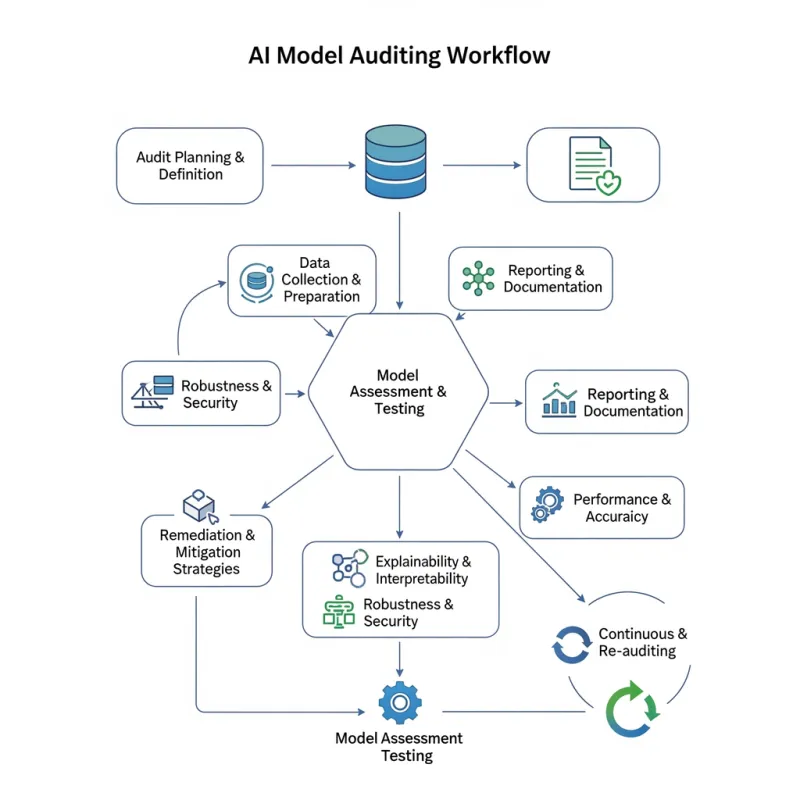
The organizations conducting the most thorough reassessments tend to approach the process in phases, beginning with an inventory exercise that is more granular than most leadership teams expect.
The first step is cataloging every active automation deployment across the enterprise — not merely the headline platforms, but the departmental tools, legacy integrations, and shadow IT implementations that accumulate over years of decentralized decision-making. Many organizations discover that their actual automation footprint is substantially larger and more fragmented than their technology roadmaps suggest.
From there, leading organizations apply a consistent evaluation framework across the portfolio. This typically involves three dimensions: operational impact (what measurable improvement does the system deliver to the processes it touches), strategic alignment (does the system support current business priorities, or was it built around objectives that have since shifted), and total cost of ownership (what does the organization actually spend to keep the system running, inclusive of all direct and indirect expenses).
The third dimension is frequently where the most significant revelations emerge. Systems that appeared cost-effective at procurement often carry substantial ongoing burdens — vendor support contracts, internal engineering time, data governance requirements, and the technical debt that accumulates when platforms are not updated to reflect evolving business conditions.
The Metrics That Actually Matter
Distinguishing automation that works from automation that merely occupies budget requires moving beyond vanity metrics. The most useful indicators tend to be process-level rather than system-level: is the end-to-end workflow faster, more accurate, and more resilient than it was before the automation was introduced, accounting for all associated costs?
Enterprise technology teams that have conducted rigorous audits report that a useful complementary measure is what might be called the intervention rate — how frequently human operators must step in to correct, override, or manually complete tasks that the automated system was designed to handle independently. High intervention rates are a reliable indicator that a system is underperforming relative to its design specification, and they carry real costs that are rarely reflected in standard performance reporting.
Another valuable lens is adaptability. Automation systems that require significant engineering effort to accommodate routine business changes — new product lines, regulatory updates, shifts in customer expectations — impose a hidden tax on organizational agility. In a business environment defined by rapid change, systems that constrain flexibility may be generating negative strategic value even when their direct operational metrics appear acceptable.
Why This Reassessment Is Happening Now
Several forces are converging to make the automation audit a priority for enterprise leaders who might previously have deferred the exercise. Macroeconomic pressure has sharpened scrutiny of technology spending across sectors, with boards and CFOs demanding clearer evidence that prior investments are generating returns commensurate with their cost.
Simultaneously, the rapid maturation of AI and intelligent automation capabilities has created a meaningful gap between what current technology can deliver and what many legacy systems were designed to do. Organizations that committed heavily to earlier generations of robotic process automation, for example, are increasingly recognizing that those platforms may not be capable of supporting the more sophisticated, judgment-intensive workflows where the greatest efficiency gains now reside.
There is also a cultural dimension. The organizations most willing to conduct honest reassessments of their automation portfolios tend to be those that have cultivated a broader discipline around evidence-based decision-making — where the value of a technology investment is expected to be demonstrated continuously, not merely assumed at the point of purchase.
Turning Findings Into Forward Momentum
The purpose of an automation audit is not to generate a catalog of failures. Organizations that approach the process constructively use their findings to redirect resources toward systems and capabilities with greater strategic potential, retire or consolidate platforms that are consuming budget without delivering proportionate value, and establish clearer performance standards for future investments.
For many enterprises, the audit also surfaces opportunities to modernize existing infrastructure rather than replace it outright. Intelligent automation platforms, when layered thoughtfully onto established operational systems, can extend the useful life of prior investments while unlocking capabilities that were not previously accessible.
The discipline of questioning what automation is actually delivering — rather than accepting the assumption that deployment equals value — is increasingly a marker of enterprise technology maturity. In an environment where the pace of innovation continues to accelerate, the organizations best positioned to capture the next generation of automation benefits will be those that have done the hard work of understanding what they already have, what it is actually worth, and where the real opportunities for improvement remain.